Everyone reads the framework differently
Hundreds of bodies assess themselves in spreadsheets, each interpreting the same control in its own words. Two organisations can describe identical work and reach opposite conclusions.
CyberNexus is the platform we built for assessing compliance with the Pakistan Information Security Framework. An organisation assesses itself against every control that applies to it, with evidence attached. The national Authority reviews that work control by control. An accredited organisation receives a certificate that a bank, a partner or a member of the public can verify in seconds.
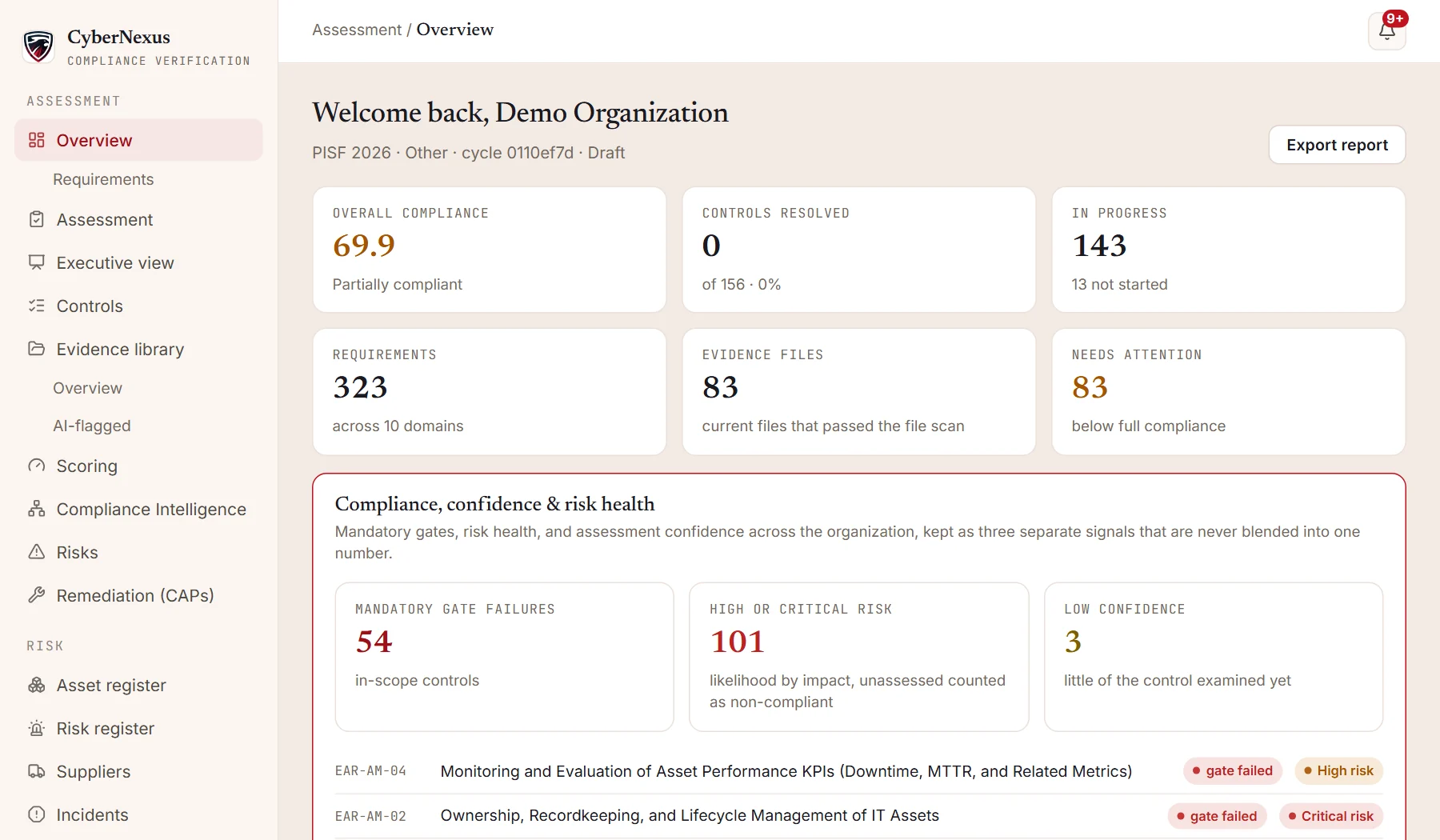
 AzbersInnovations
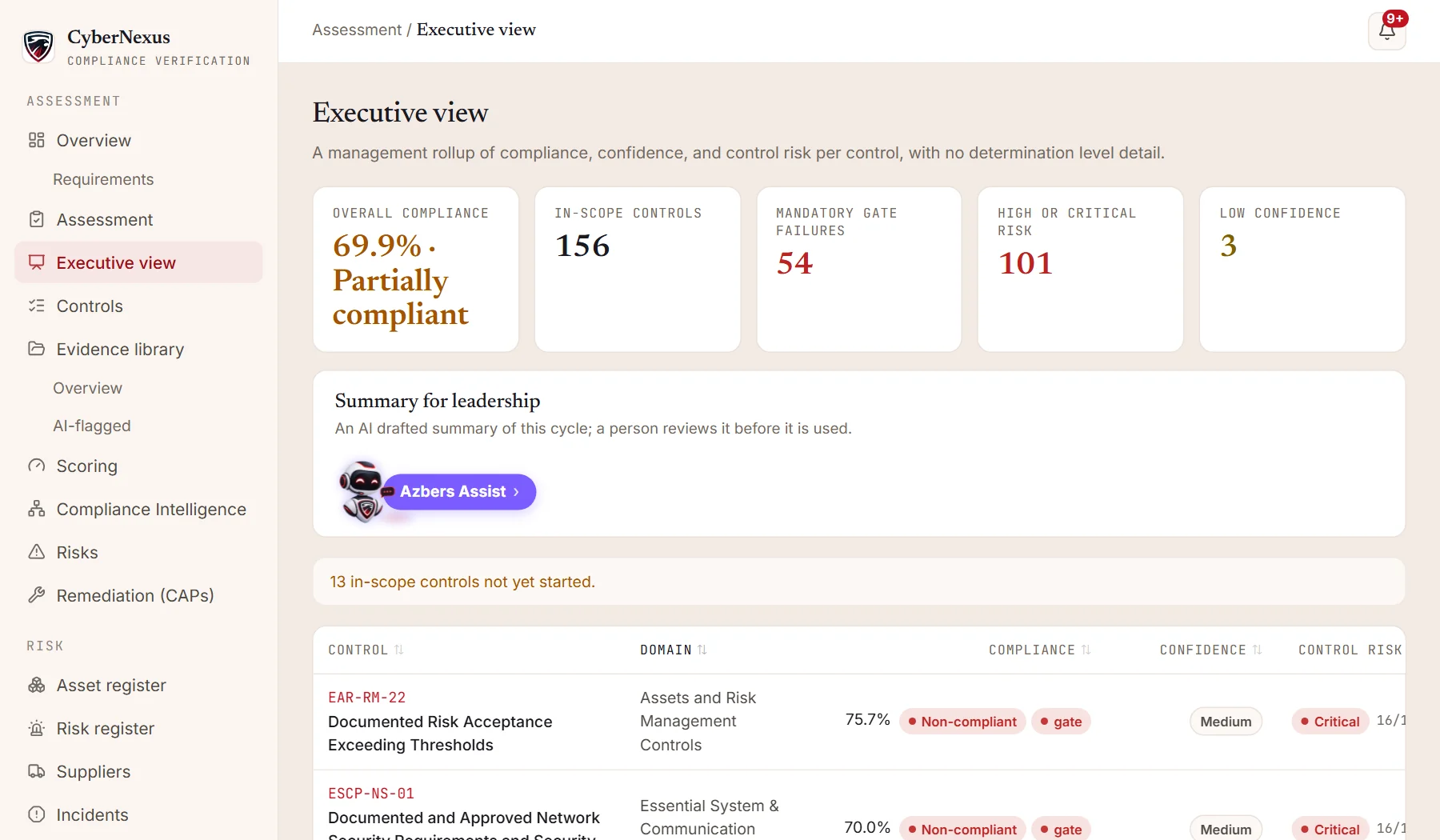 AzbersInnovations
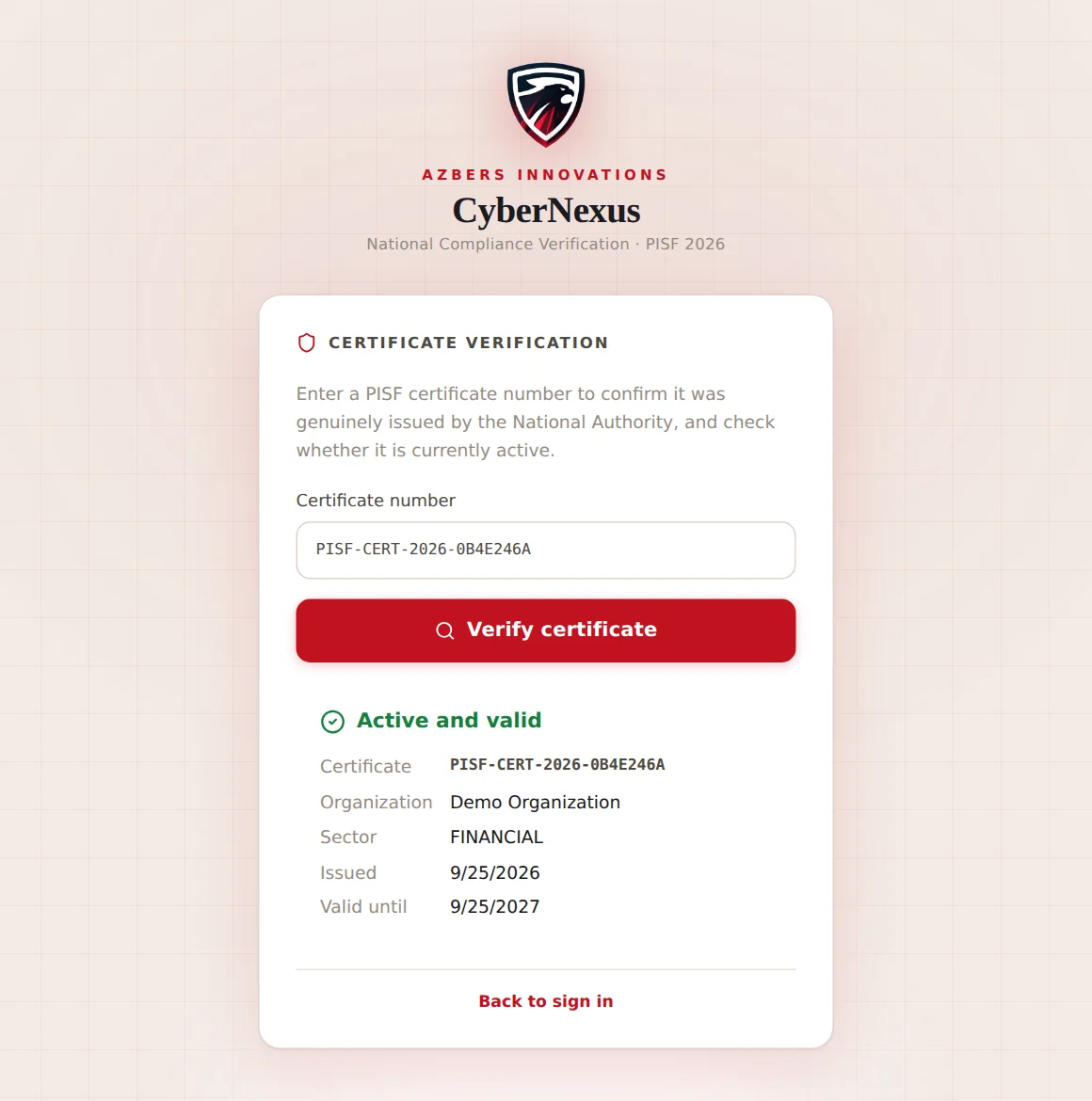 AzbersInnovations
Screens from the CyberNexus demonstration environment. The organisation, its scores and the certificate are sample data.
PISF now reaches federal and provincial bodies, autonomous organisations and critical infrastructure. When we sat with the teams preparing for it, the same three problems came up every time, and none of them were about the controls themselves.
Hundreds of bodies assess themselves in spreadsheets, each interpreting the same control in its own words. Two organisations can describe identical work and reach opposite conclusions.
One team attaches a signed policy, another a screenshot, a third nothing at all. Results built on that cannot be compared with each other, and a reviewer has no reason to trust them.
When review happens over email and in meetings it is slow, and afterwards nobody can reconstruct why a decision went the way it did. That is exactly what an appeal will ask about.
The organisation doing the work, the Authority judging it and the operator running the platform need different things, and none of them should be able to reach into the others. So each has its own portal and its own sign in, and a session in one carries nothing into another.
Self assessment against every applicable control, an evidence library, control ownership, corrective action plans, a readiness check before submission, and the team and its roles.
Six roles
Review queues scoped by sector, case audit control by control, findings, clarifications, appeals, directives, the certificate lifecycle and a national view of posture.
Four roles
Approving organisations, AI settings, security policy, the PISF catalogue and the platform audit log. The operator runs the system without ever seeing what an organisation has assessed.
Authenticator code required
Every step is taken by someone in a specific role, and every step is written to a record that cannot be edited afterwards. Here is the path a case takes from the day an organisation registers to the day its certificate can be checked.
Email confirmed with a one time code.
The operator checks the body is who it says it is.
Every control that applies to its profile is seeded.
Scope each control, answer it, attach the proof.
Every gap gets a plan with an owner and a date.
The finished cycle is frozen and sent to the Authority.
An auditor records a verdict on every submitted control.
The sector head approves, returns or rejects the case.
The Authority head accredits, asks for changes or declines.
Issued with a number and a QR code, and publicly verifiable.
We ran this whole chain end to end on the real software before we showed it to anyone, down to a certificate number that verifies on the public page. If a decision is declined, the organisation can appeal inside the platform, and the appeal is handled with the same record in front of everyone.
These are the screens people work in every day, taken from the demonstration environment. Nothing here is a mock up.
Compliance, confidence and risk health are shown separately and never averaged together. A score built on weak evidence looks different from the same score backed by strong evidence, and leadership can see which one they have.
 AzbersInnovations
Each control opens with its statement, its purpose, what it is meant to achieve and how to implement it. The person answering never has to go and find the framework text, and the reviewer later reads exactly what they read.
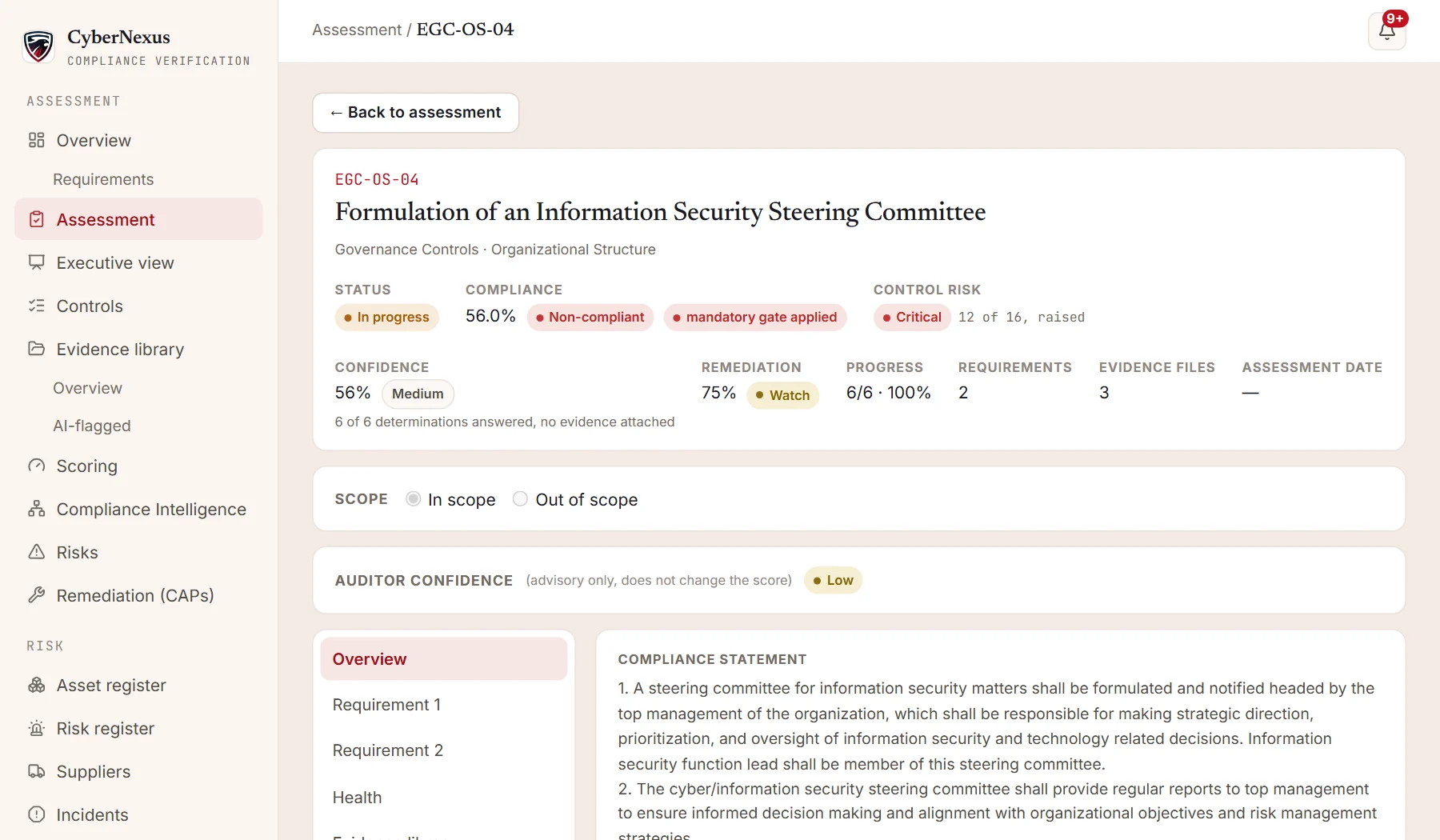 AzbersInnovations
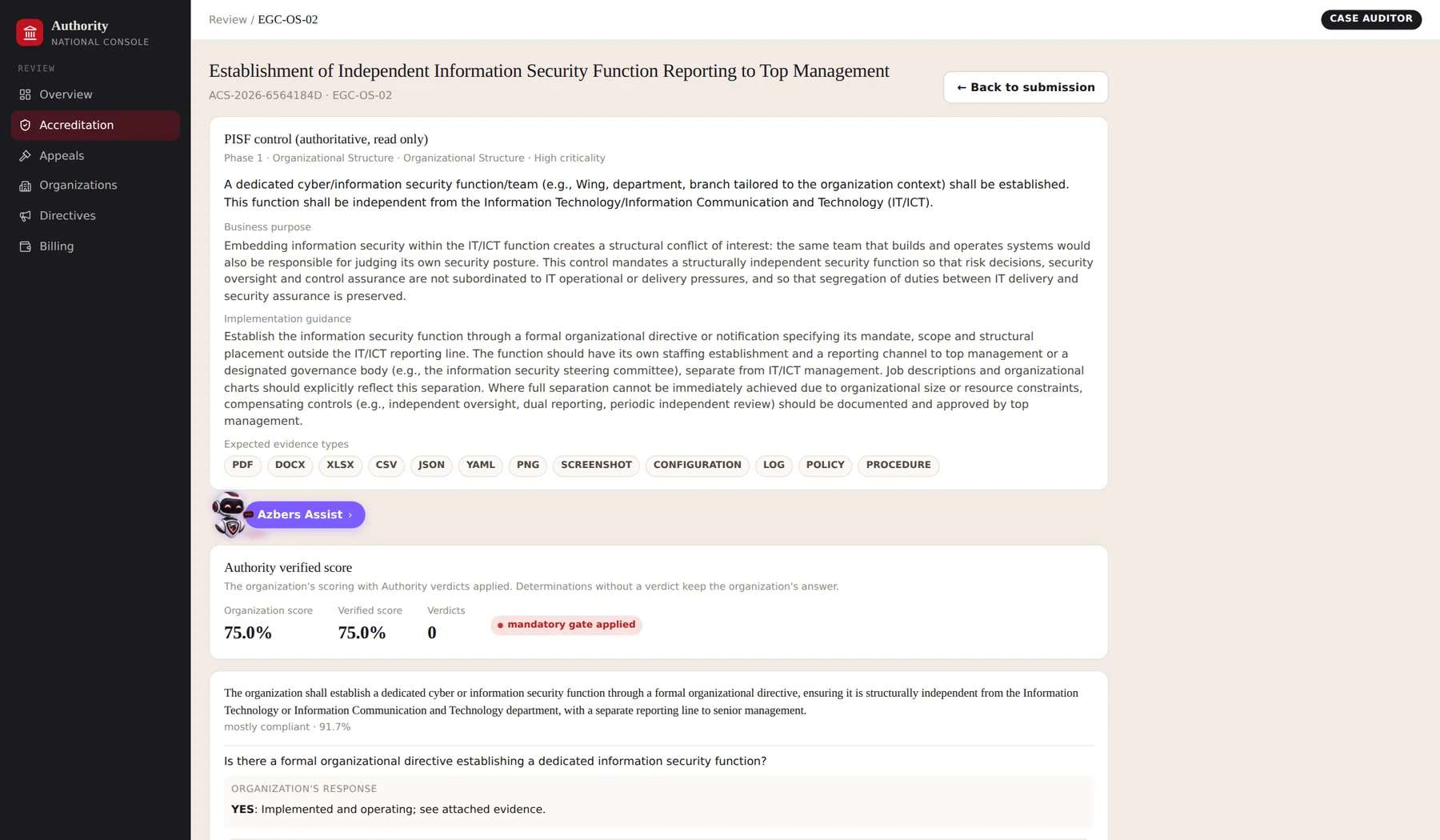
The case auditor sees the authoritative control, the organisation's answer and every file behind it on one screen, and records a verdict for each control. The Authority's verified score sits next to the organisation's own, so a difference is visible rather than argued about.
 AzbersInnovations
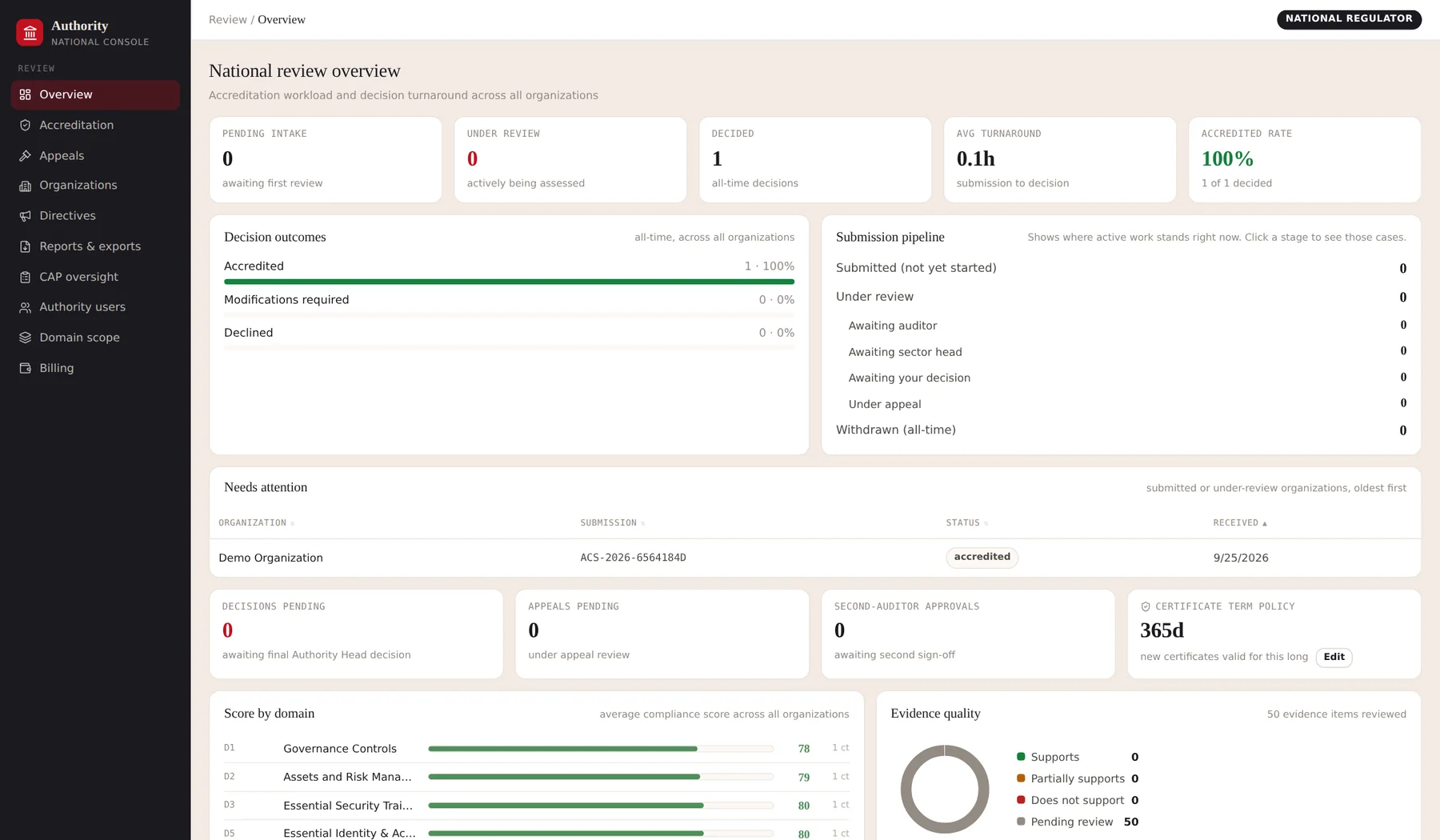
The regulator sees every submission, decision and gap across the country, by sector and by domain, instead of assembling the picture from reports that arrive in different shapes. The weakest domains are visible nationally, which is where guidance and training should go first.
 AzbersInnovations
PISF and the Authority ask organisations to do more than answer controls. They expect an asset and risk register, policies staff have acknowledged, supplier assessments, training records, incident reports on a clock and audits by registered firms. These now live in CyberNexus beside the assessment, and the Authority sees what it needs from each without seeing what it does not.
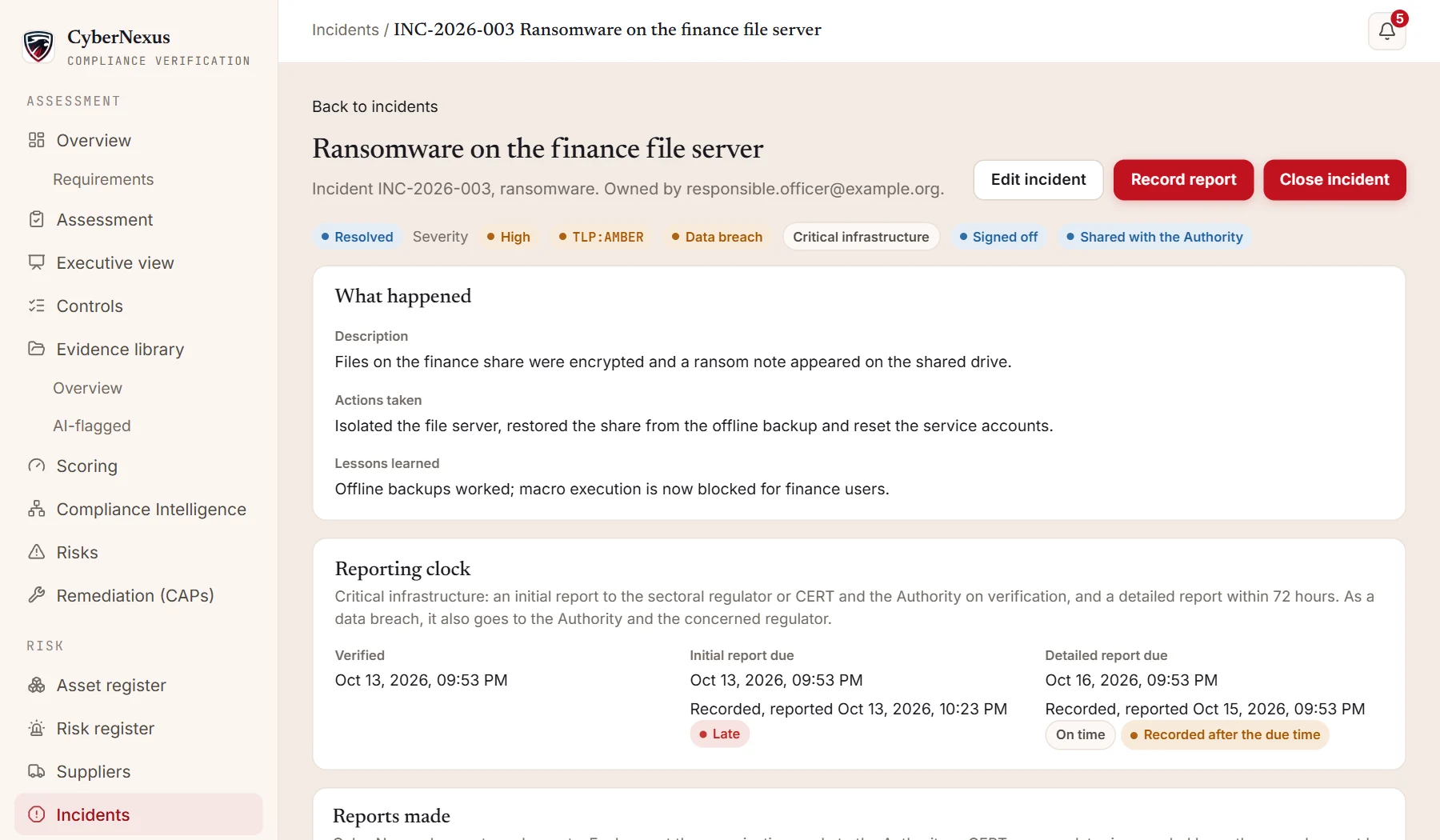
Every verified incident records when it was detected, when it was verified and every report made to the Authority, a CERT or a regulator. The reporting clock follows the organisation's designation, so whether a report was on time is a fact on the record.
 AzbersInnovations
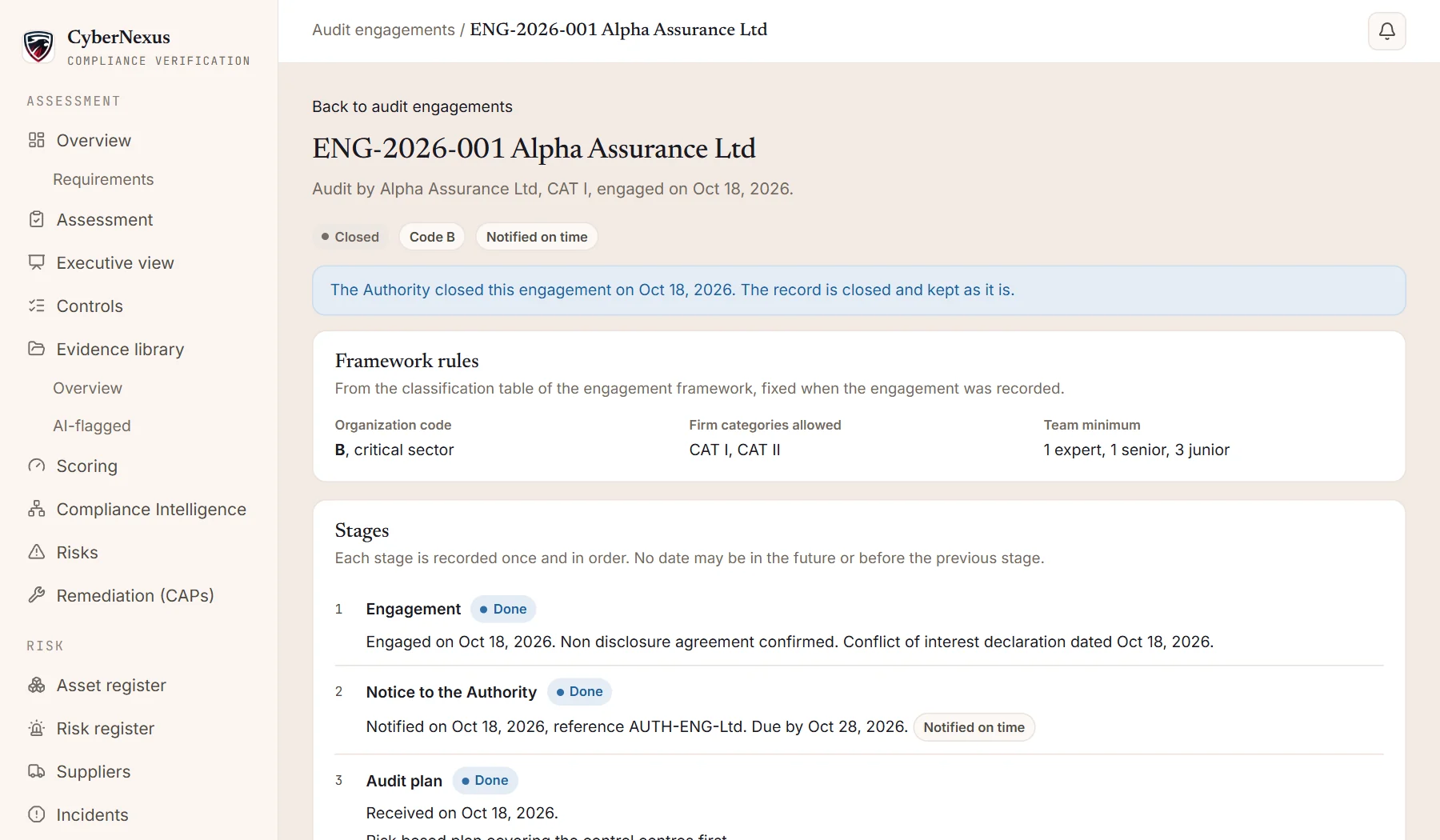
Audits by registered firms follow the Authority's engagement framework. The firm category is checked against the organisation's code, the notice deadline is counted in working days, and each stage is recorded in order through to the Authority's acceptance.
 AzbersInnovations
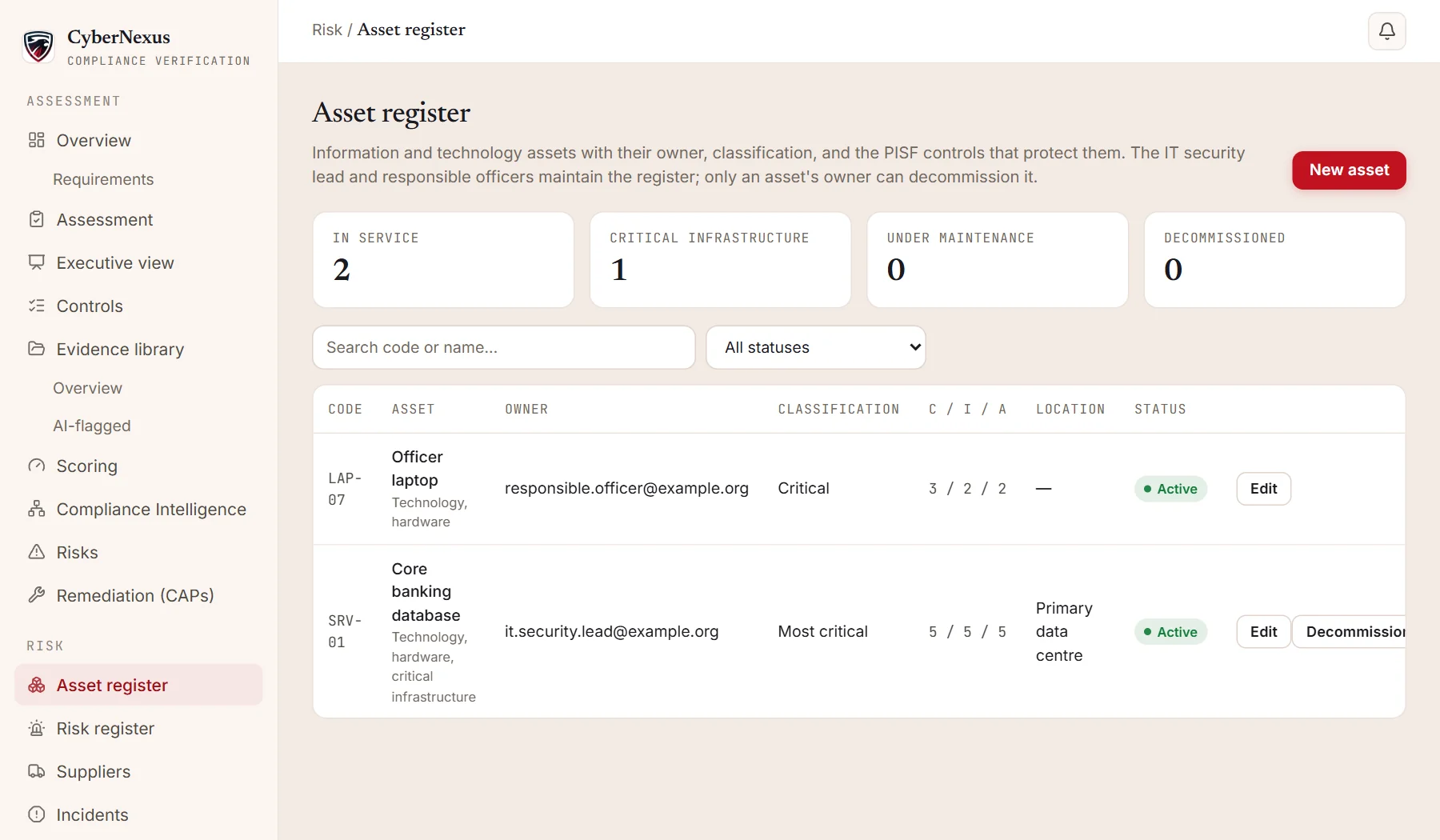
Assets carry an owner, a classification, a critical infrastructure flag and the PISF controls that protect them. Risks are written against those assets, scored before and after treatment, and compared with the appetite the organisation set.
 AzbersInnovations
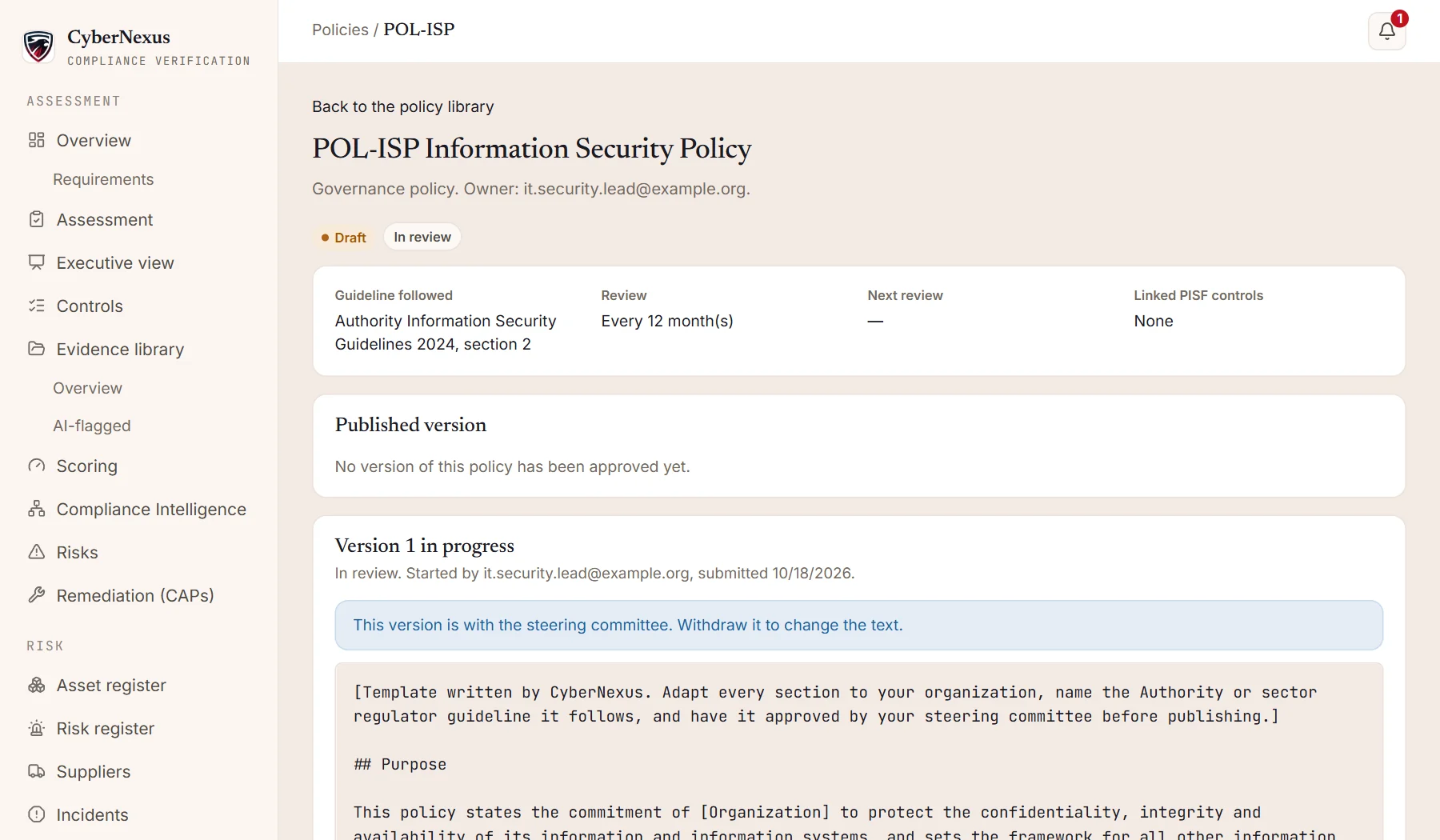
Policies start from templates written to be adapted, go through the steering committee, and are published as numbered versions. Staff acknowledge the version they read, and the approved policy counts as evidence for the controls it supports.
 AzbersInnovations
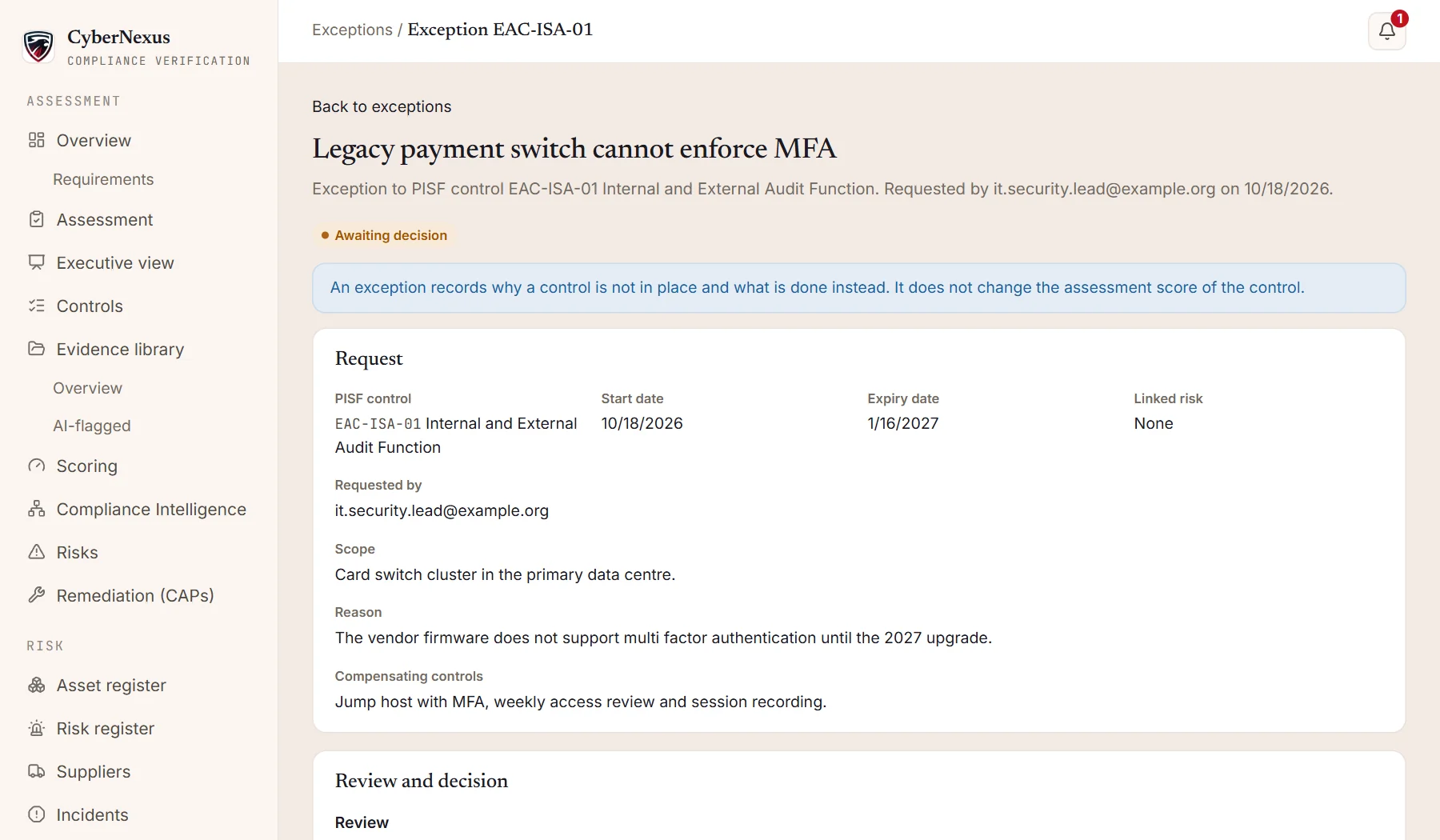
When a control cannot be met yet, an exception records the scope, the reason, the compensating controls and an expiry. The requester, the reviewer and the person who decides are always three different people.
 AzbersInnovations
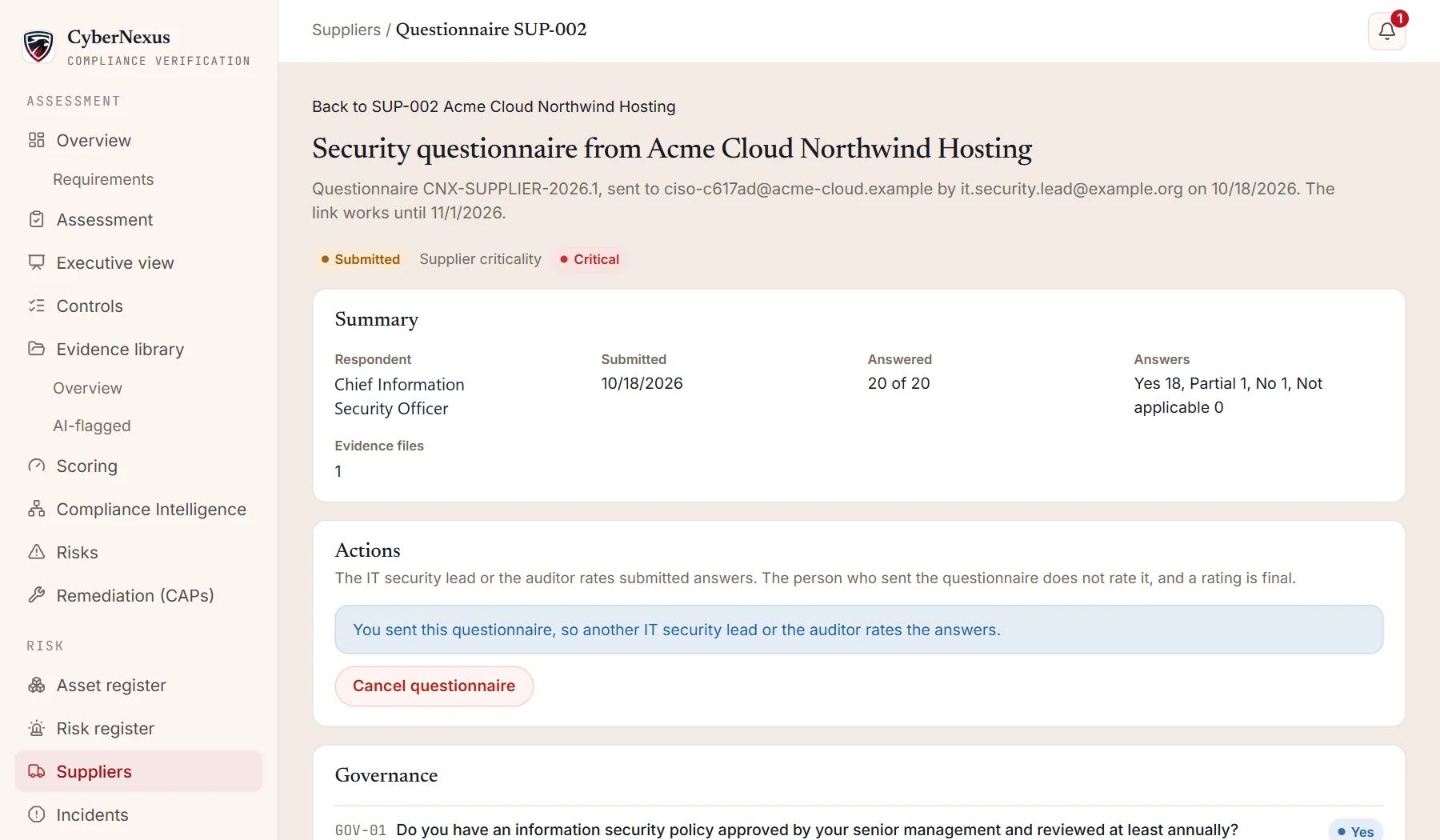
Suppliers are rated by how critical they are and sent a PISF based questionnaire through a private link. The answers come back with evidence and are rated by someone other than the person who sent them.
 AzbersInnovations
Training runs as campaigns with an audience, a due date and a refresher interval. Results from a learning system or an attendance sheet are imported in bulk and kept as they were recorded.
 AzbersInnovations
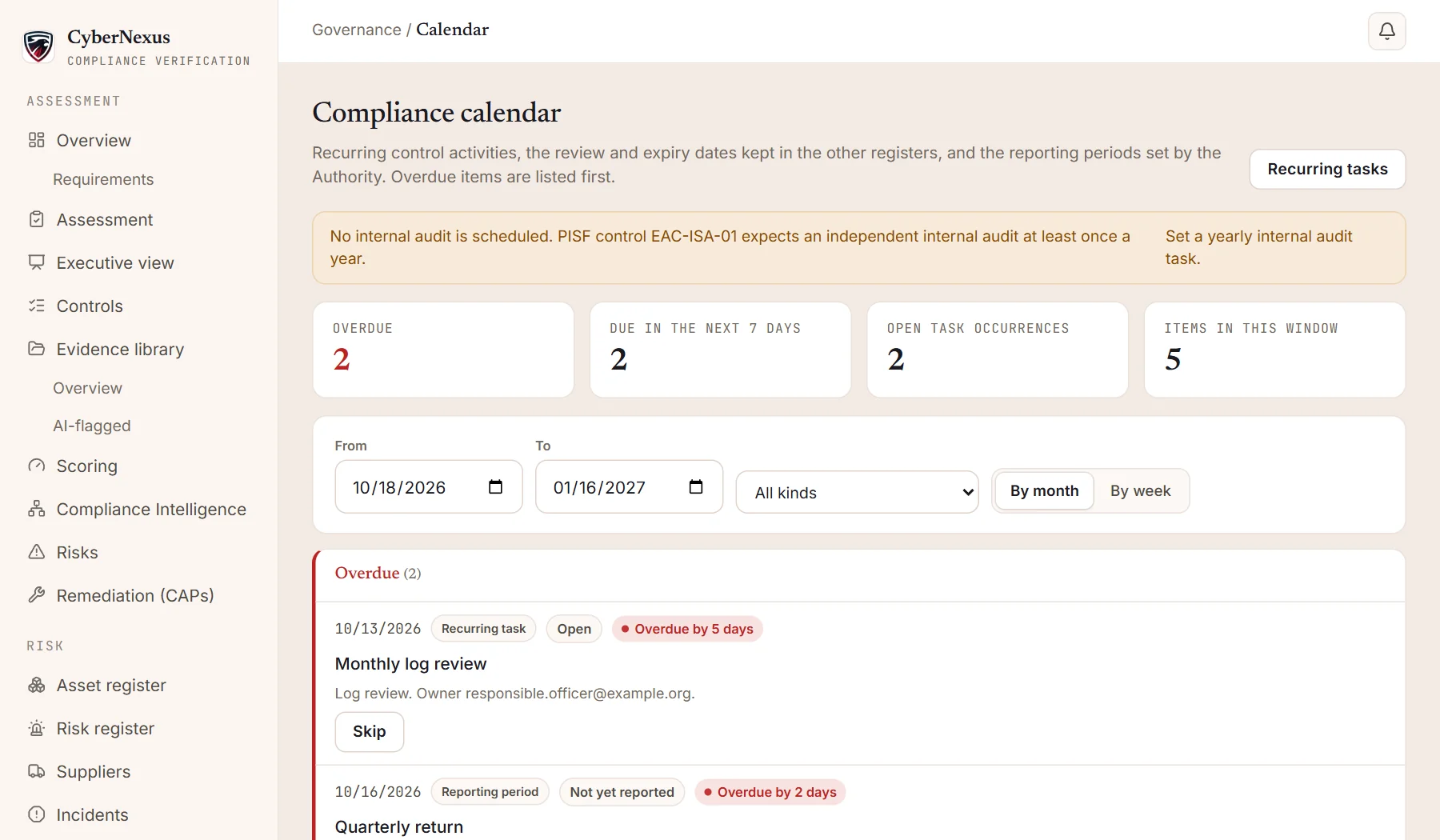
Recurring control tasks, policy reviews, exception expiries, supplier reassessments and the Authority's reporting periods sit in one calendar, overdue first. It also flags expected work that has not been scheduled at all.
 AzbersInnovations
Screens from the CyberNexus demonstration environment. Organisations, people and records are sample data.
These are enforced by the software on every request, not by hiding a button. Each one closes a gap we have seen in assessments run by hand, where a deadline quietly turns a rule into a suggestion.
The roles mirror how assessment actually works inside an organisation. The limits are checked by the server on every request, so nobody reaches past their line by guessing a link.
| Role | What it does | What it can never do |
|---|---|---|
| Administrator | Runs the cycle, invites the team, assigns ownership and submits | Answer or approve assessment work |
| IT security lead | Assesses, sets scope, plans corrective actions and completes controls | Submit for accreditation |
| Responsible officer | Assesses the controls assigned to them | Touch controls they do not own |
| Internal auditor | Assesses with final say inside the organisation and reads the audit log | Manage the team |
| Commenter | Reads everything and adds review comments | Change an answer or a piece of evidence |
| Viewer | Reads | Comment on or change anything |
Most compliance work is reading, and that is where AI earns its place. It reviews evidence, suggests determinations, drafts findings and corrective plans, and summarises a submission for a busy reviewer. It never decides anything, and everything it touches carries its own marking so people always know.
AI drafts an answer, a finding or a plan.
The draft is stored as pending review, and nothing official moves.
Someone accepts it, edits it or rejects it through the normal save.
The decision stays tied to that exact draft and that person.
AI never writes directly to answers, findings, corrective actions or certificates.
A draft cannot be edited or deleted afterwards by anyone, including the person who reviewed it.
The operator chooses the AI provider, can run models hosted inside Pakistan, or can switch AI off entirely.
An organisation's finalised PISF results can be sent to ControlGraph, which estimates how far that work already carries toward ISO 27001, NIST CSF and the other frameworks it answers to. CyberNexus keeps the assessment, the evidence and the Authority's verification. ControlGraph keeps the frameworks and the relationships between them. Results travel signed, and anything altered on the way is refused.
The questions that come up most often, answered the way we would answer them on a call.
Yes. We demonstrate CyberNexus on the real software with sample data, and we can do it on your premises. A demonstration walks one case from the first answer to a certificate that verifies on the public page.
In Pakistan, on government or accredited infrastructure that you choose. CyberNexus supports private cloud, on premises and air gapped deployment, because for this kind of data hosting is a condition rather than a preference.
Only if the operator chooses a provider outside it. AI can run on models hosted inside Pakistan, or be switched off entirely, and the platform works either way.
No. It drafts, and a person decides. Nothing it produces changes an answer, a finding, a corrective action or a certificate until someone accepts it, and that acceptance is recorded against their name.
Yes. Alongside the PISF assessment it keeps an asset and risk register, a policy library with staff acknowledgement, supplier assessments, training campaigns, control exceptions, a compliance calendar, an incident register with the PISF reporting clocks, and audits by firms registered with the Authority.
The Authority sees what its role needs, such as incident reports shared with it, audit engagements and counts across organisations. The registers themselves, including assets, risks and staff training records, stay with the organisation.
We test it ourselves the way an attacker would, and we welcome an independent audit and penetration test by the Authority or an agency it nominates before it holds real assessments.
No. The data belongs to the organisation that owns it and exports in open formats.
We demonstrate CyberNexus on the real software with sample data, walking one case from the first answer to a certificate that verifies. Tell us who should be in the room.